Contact:Mr. Sam Lu
Tel: +86-21-58116435
Fax: +86-21-51316027
Mobile: +8618801858806
E-mail: info@
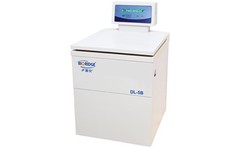
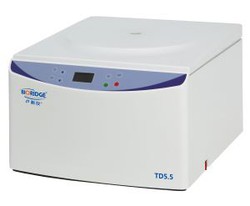
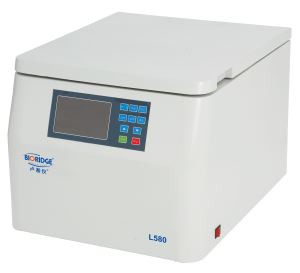
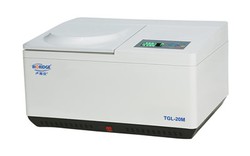
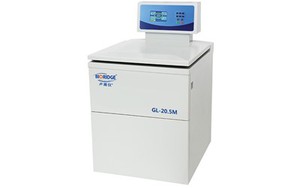
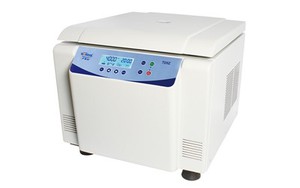
The high-speed centrifuge is a laboratory routine centrifuge, widely used in research, education, and production departments of biology, chemistry, and medicine. Suitable for rapid separation and synthesis of trace samples. Today we mainly introduce the principle and characteristics of high-speed centrifuges, hoping to help users better apply products.
The centrifuge has a cylinder that rotates at a high speed around its own axis. This cylinder is called a drum and is usually driven by an electric motor. After the suspension (or emulsion) is added to the steam drum, the steam drum is quickly driven to rotate at the same speed as the steam drum, and the components are separated by centrifugal force and discharged separately. In general, the higher the drum speed, the better the separation.
Centrifugal separators have two working principles: centrifugal filtration and centrifugal sedimentation. Centrifugal filtration refers to the centrifugal force generated by the suspension under the action of centrifugal force field. It acts on the filter medium to make the liquid pass through the filter medium to become the filtrate, while the solid particles are trapped on the surface of the filter medium to achieve liquid-solid separation. Centrifugal sedimentation is the use of centrifugal force field. The principle of rapid sedimentation and stratification of components of different densities (or emulsions) enables liquid-solid (or liquid-liquid) separation.
There is also a separator for experimental analysis that can perform liquid clarification and solid particle enrichment, or liquid-liquid separation. These separators come in different structural types and operate under atmospheric, vacuum and freezing conditions.

Copyright Shanghai Lu Xiangyi Centrifuge Instrument Co., Ltd. All Rights Reserved.Privacy Policy