


Mini Centrifuge | Technical Encyclopedia
Release time:
2023-04-13
Overview:
What are the advantages of a mini centrifuge compared to a traditional centrifuge?
A mini centrifuge is a small-scale centrifuge that can be used for experiments and sample preparation in fields such as medicine, chemistry, biotechnology, and laboratories. Compared to traditional large-scale centrifuges, mini centrifuges offer several advantages.
1. Small size: Compared to traditional large-scale centrifuges, the mini centrifuge is much smaller in size, making it easy to store and transport. It also doesn't require the large amount of space needed by conventional centrifuges, allowing it to be moved and used more freely within the laboratory.
2. Low price: Compared to traditional large centrifuges, mini centrifuges are more affordable because they don’t require large motors or highly durable components. This makes mini centrifuges ideal for laboratories and schools with limited budgets.
3. High portability: Thanks to their small size and light weight, mini centrifuges can be easily transported from one location to another. This makes them ideal for field research and mobile laboratories.
4. Simple operation: Miniature centrifuges are easier to operate than large-scale centrifuges, as they typically have only a few simple control buttons. This makes them more suitable for students and beginners conducting experiments.
5. Energy efficiency and environmental protection: The mini centrifuge has lower power consumption, resulting in reduced energy use and less environmental impact.
6. High efficiency and speed: Although mini centrifuges have a smaller processing capacity, their rotational speeds are typically higher than those of larger centrifuges, enabling experiments to be conducted quickly and efficiently.
In addition to these advantages, some mini centrifuges also feature other characteristics, such as sensors and adjustment systems, which ensure the reliability and accuracy of the operation process. Moreover, they can be customized according to experimental requirements, including adjustments to rotation speed and temperature control.
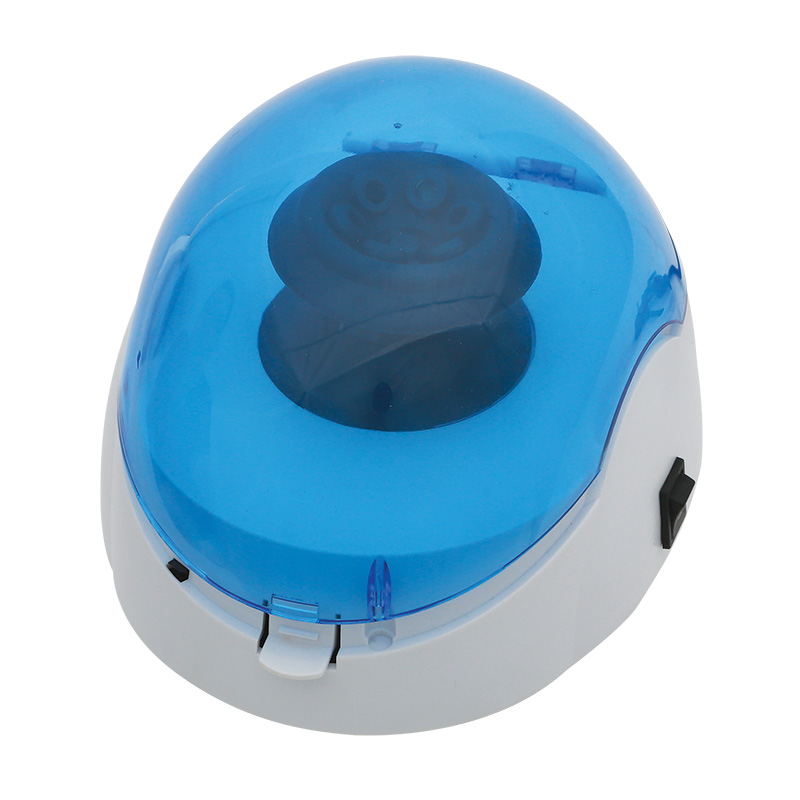
Taking into account these advantages, as well as their ease of use and portability, mini centrifuges have become common tools and equipment in laboratories and schools.
1. Body design
Miniature centrifuges are primarily small-scale devices used in laboratories and scientific research settings. Therefore, their body designs must take into account factors such as compact structure, small footprint, and ease of operation. When designing these devices, careful consideration must be given to material selection—ensuring both the strength and stability of the body while keeping it as lightweight as possible for easy handling and maintenance.
2. Drive System
The drive system is an essential component for the operation of a centrifuge. Miniature centrifuges typically employ electric drive systems, and factors such as motor power and operational stability must be carefully considered. At the same time, the transmission method of the drive system—such as belt-pulley transmission or direct coupling—also needs to be taken into account, in order to ensure the efficiency and stability of the drive system.
3. Control System
The centrifuge control system is crucial for realizing the automated operation of a centrifuge. Miniature centrifuges typically employ microcomputer-based control systems that use sensors to monitor the centrifuge’s operational status and, via control programs, regulate parameters such as speed and duration. Therefore, when designing a centrifuge control system, it is essential to take into account factors such as the system’s stability, accuracy, reliability, and programming flexibility.
4. Rotor Design
The rotor is the core component of a centrifuge. Miniature centrifuges typically use small steel rotors. Since the rotor is significantly influenced by factors such as applied forces and rotational speed, its design must take into account aspects like mass, strength, and stability. Moreover, the rotor's shape and geometric dimensions also affect operational performance and separation efficiency.
5. Control System
Centrifugal force is a crucial factor affecting separation speed and separation efficiency. Therefore, miniaturized designs must take into account the control and adjustment of centrifugal force. Typically, this is achieved by adjusting the rotational speed or the rotor diameter. It is essential to ensure uniform distribution and stable control of centrifugal force in order to guarantee the accuracy and stability of the centrifugal separation process.
6. Security System
Safety is a fundamental requirement for the operation of centrifuges. When designing mini-centrifuges, it is essential to take safety into account, including measures such as secure rotor connections, rotational speed limits, emergency stop mechanisms, and temperature sensors, all of which are designed to ensure the safety of laboratory personnel.
7. Auxiliary equipment
The ancillary equipment includes components such as centrifuge tubes, centrifuge buckets, tube holders, and centrifuge rotors—all of which must be used in conjunction with the main unit. Therefore, when designing a centrifuge, it is essential to take into account factors such as the compatibility, quality, and stability of the ancillary equipment. At the same time, ease of operation and temperature control must also be considered to meet experimental requirements.
In short, miniaturized designs must take into account multiple factors—including the body structure, drive system, control system, rotor, centrifugal force control system, safety system, and auxiliary equipment—to ensure operational accuracy and stability and meet experimental requirements.
Address: No. 9, Lane 4390, Hulan Road, Shanghai
Website:www.lxylxj.com
Tel: +86-21-58116435
Fax: +86-21-51316027
Mobile: +8618801858806
E-mail: info@bioridgecentrifuge.com


Messages
Please leave your contact information, and we will get in touch with you as soon as possible.
Links: